About Security in Shredding

Specialising in secure confidential document shredding services with a reputation for exceptional security, customer service. Delivering value for money and the utilisation of leading technology compliant to the highest security standards within the industry.

Purge Your Data & Call On-Site Paper Shredding Service

confidential shredding, clean desk policy

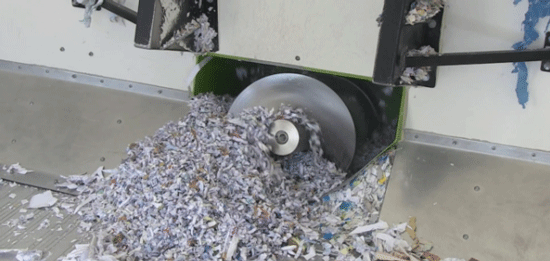
Are you searching for an on – site document destruction shredding security provider in Cork? It has become convenient, efficient and cost effective to hire a document shredder in Cork or nationally throughout the region of Ireland as Security in Shredding is providing its renowned mobile shredding service at your premises. It is a responsive service operated by technical professionals.

Destruction of personal data documents and digital data stored in devices such as hard-drives in front of the client at their location is a truly secure service for every organisation. Paper shredding Cork is one of the service providers with automated and technological advancing shredding machines that are operated by experts.

If you are working in an organization and have sensitive papers and confidential data which is no longer required it increases the risk and has proved to be essential to know what actually may happen to them. Shredding them yourself is also an awkward issue due to many reasons. Some major risks with in-house document shredding are;

  • High dependency on workers for all confidential paper and data destruction
  • Time consuming shredding task for employees which can cause conflict of interests.
  • Essential training is required for employees to maneuver paper shredding systems and establish what data to destroy
  • Lack of knowledge concerning paper shredding and data destruction
  • No accountability, in the case of confidential data breaching
  • No peace of mind regarding appropriate data destruction
  • The given organization is open to negligence in the case of a data breach

The responsive on – site document destruction service of Cork security shredding is serving their clients for the past 10 years and proven to be a leading mobile shredding service in the entire Ireland. The Shredding Company is committed to providing their clients with a prominent service of confidential paper data destruction.

An integrated business waste management usually includes data destruction services of Security in Shredding which includes confidential data destruction like hard disk, CD or DVD, USB drive, casino chips destruction, computer backup data shredding, plastic cards such as ATM cards destruction, and all types of tapes such as reel to reel recording tapes and cassettes shredding.

A professional mobile shredding service is now available in your region on your single call whether you require paper shredding Dublin or confidential shredding Cork. Responsive and expert staff are here to ensure clients receive the highest standard and confidential paper shredding services.

The fully automated shredding technology that Cork security shredding holds provides pioneering paper shredding services in Ireland to all the clients in the region

Paper Shredding Limerick & The Importance of Uniforms

Security in Shredding Data Protection Law

Our data processing team operate a confidential shredding service in uniform throughout all our Limerick based clients. Uniforms also exist outside the workplace, Limerick GAA (the shannonsiders) iconic green jersey can also be considered a uniform. The reasons for wearing a uniform do have their benefits which are listed below.

Uniforms for Corporate Branding

Having a distinctive uniforms in the colours associated with the company can assist in the establishment of an impression in the mind of the consumer. Security in Shredding’s uniforms help to identify its employee’s as individuals who are associated with it and its services, and it helps to brand the company by distinguishing it from the competition. Consistency in employee’s appearance can create a positive impression on the customer and contribute to the projection of the Security in Shredding’s corporate image.

Uniforms for Portraying Competence

Uniforms can enable customers to identify employees eliminating the possibility of a customer mistakenly asking a member of the public for help. Employees wearing a uniform encourage confidence in the client by portraying the individual is a professional with service knowledge and an eagerness to help. A uniform puts the force of the corporate reputation behind the individual, making him look reliable and trustworthy as a company representative.

Uniforms to Promote Security

Just as a Gardaí or Army uniform identifies an officer, Security in Shredding’s uniform identifies its employees who are out onsite conducting a service call or delivery to a client’s premises.

Uniforms to Eliminate Dress Codes

Having a compulsory requirement for Security in Shredding’s employees to wear its uniform eliminates the need for creating and enforcing a dress code. Enforcing a dress code can lead to hard feelings on the part of employees who are told that their attire is not appropriate for the workplace.

Overall it is important to Security in Shredding that its employees are always dressed in uniform for their job roles and are neat and tidy at all times. Security in Shredding provide a professional and secure data destruction service nationwide.

secure document destruction limerick.

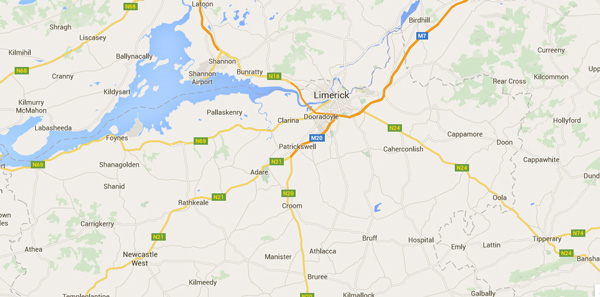
Your data security is our priority. We operate throughout Limerick and Limerick county. We also provide on site shredding in all major cites in Ireland. For more information on a secure document shredding service, please visit our site for more information.

Why Company’s Need To Address Improper Document & Data Disposal

data destruction and collection service

Secure document shredding specialists deal with physical and digital data on a regular bases. How we handle this data is important to ensure confidentially. Confidential shredding and data protection go hand in hand to prevent data breaches occurring.

It is widely known that employees and hackers are biggest cause of data breaches. There have being high profile hacking cases involving employees inappropriately clicking on links that  permits the hackers access to the organisations network and software system.

In order to have an appropriate confidential document and data disposal system in place, you should firstly contact a service provider whom has ample experience in the industry with a 100% clean track record (i.e. an occurrence of zero data breaches). Such a Data Service Provider will be able to answer all your queries and concerns regarding how to implement a secure and efficient document management system – all the way to end of life documents as well as in-house training of staff and policies and procedures. “At the end of the day, you are relying on employees to manage confidential documents in a secure and confidential manner.”

privacy-data-security

In order for one to have piece of mind, a training programme should be established for the induction and on-going training (in-house) for the organisations employees. When the employees understand the importance of efficient and accurate Data Management and Data Protection Legislation; it minimises the risk of a data breach.

When the data reaches its end of life, it needs to be securely disposed of. This is where a certified professional Data Processor like Security in Shredding provides (at the clients choice) onsite and/or offsite data destruction. A company such as Security in Shredding are specialists in the entire area of Data Management. They have an unblemished record and provide a professional, certified and recognised data destruction services.

In order for an organisation to maximise compliance in the workplace, proper appropriate disposal of information has to be made easily accessible for the employee.

Security in Shredding do not recommend placing a recycling bin in close proximity to a printer of copying machine for example as employees can easily discard the unwanted copies or data into the recycling bin. However, Security in Shredding can implement secure lockable consoles throughout the building in specific locations as requested by the organisation and also in close proximity to the copying or printer machines.

If you wish to have a conversation with any of our Data Consultant Specialists, you can pick up the phone and dial +67 24848 or email us at info@securityinshredding.com.

Hard Drive Must Be Destroyed To Ensure Data Destruction

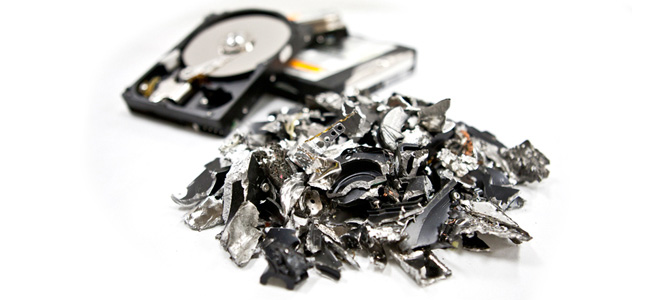
harddrive destruction, Media Destruction, Confidential Shredding Service

All digital data is stored on a hard drive. Weather its stored locally (your own device) or on a cloud server, the data is stored on a hard drive. The device used to access this data be it a computer, laptop or tablet technology will become outdated or slow to use. When the time comes you may wish to get rid or sell the outdated device.

This is where the data risk lies. Before you sell the device you might have deleted all your local data from the device or even formatted the drive. This does not remove the data from the drive.

The fact is there are software programs designed to help thieves extract data even after data has been electronically destroyed.

At the same time, there are other concerns that make secure e-media and hard drive disposal a critical aspect of device security.

Current Storage Drive Trends:

Affordable.  Hard-drives and storage devices in desktop computers, laptops, servers, phones, USB thumb drives, printers, copiers, and other equipment have become widey available and affordable. In 2015, technology companies shipped more than 2.6 billion devices containing hard drives, according to IT research firm Gartner.

Internet of Things (IoT).  Digital data storage and usage is increasing in businesses and organisations. This increased usage means that more and more devices are connected to a network and can increase the risk of data breaches within a network. Protecting against these potential as data breaches are increasing.

Upgrading.  Electronics become obsolete (and are replaced) within three or four years – and that affects BYOD security and other safeguards. We live in a world where the number of mobile devices exceed the number of people in the world. When upgrading ensure that the older device is destroyed or the data storage device is destroyed.

Cybercrime.  Industry experts predict a continued boom in cybercrime. In America the terms of cost, the average consolidated total cost of a data breach rose 23% to $3.8 million in 2014 compared to the previous year. The 2015 Cost of Data Breach Study: Global Analysis from Ponemon also showed that the average global cost for each lost or stolen confidential record increased from a consolidated average of $145 to $154.

If it can happen in America it can happen anywhere else. Most of the applications you use will be developed globally and the breaches

Responsibility.  Data Protection is a corporate priority and responsibility. The Data Protection Commissioner is set up to ensure that businesses and organisations are protecting data correctly. The DPC also provides guideline on how to protect your business data from breaches. Guidelines can be read here: https://www.dataprotection.ie/docs/Guidance-Material-Menu-Page/m/219.htm

Secure document shredding and media destruction companies will provide secure method of data destruction. For more information please visit our site.


6 Steps To Improve Your Data Security

privacy-data-security

Data is King. Protecting your data comes in many forms. Your confidential document shredding specialist will securely destroy any sensitive documents. Data protection is equally important as data destruction. IBM are a leading High Tech company and provide you with relevant information and software to improve your security.

IBM Security solutions for data security and privacy provide a holistic approach that helps prevent data loss while enabling data access to support business operations, growth and innovation. These solutions help you ensure regulatory compliance, defend against internal and external attacks, and can lower storage and data management costs.

IBM Security solutions for data security and privacy enable a layered approach to achieving data security that helps you:

IBM also provide a free software for you to assess and detect vulnerabilities. The software will detect weak passwords, any misconfiguration on your database. Read more about it here: https://www-03.ibm.com/software/products/en/security-guardium-vulnerability-assessment  

While IBM methods deal with digital data the crossovers and similarities can be applied to your paper data. Paper shredding services will also offer digital data protection and knowledge. Knowing these risks and implementing the steps to prevent a data breach will benefit your business or organisation in the long run.

Technology terminology can be confusing to understand but implementing security measures for digital devices is pretty straight forward. For more information on a data protection and security please contact us or visit our site for more information.

Data Protection With Workplace Technologies

Digital Data & Paper data equally important to protect

Your confidential document destruction service is more than just paper data destruction. Digital data also has a secure data destruction method. The devices used to view this data must be properly protected to ensure your data is protected.

Mobile technology increases workplace productivity. Smart phones, laptops, i-pads and other devices allow employees to work regardless of location. As good as these mobile devices are they also increase the risk of a potential data breach too.

So how does an organisation maintain the increase in productivity whilst protecting its confidential information?

Embrace it; The use of mobile devices assists the employees in their efficiency and productivity.

Latest Technologies; By keeping your technologies up-to-date you are ensuring that productivity is not being hindered by the use of out-dated technologies.

CYOD Policy. For improved security control, a Choose Your Own Device (CYOD) policy is recommended. This allows employees to choose devices from a list of approved choices, and companies could equip devices with the appropriate security.

Control of the apps. While apps can improve both the efficiency and speed of specific work tasks; Security in Shredding encourages organizations to provide employees with practical and approved enterprise-grade mobile apps for work.

Digitize. In todays world there is a growing number of organisations whom are digitizing information and processes to reduce costs. But all sensitive data still has to be properly disposed of when it is no longer required. Security in Shredding strongly recommend organisations to out-source the destruction of data when it reaches end of life. A certified data destruction service provider will securely destroy sensitive material when it reaches its end of life. Proper certified destruction guarantees that data cannot be recovered.

Cloud computing. While cloud benefits include cost savings, elasticity, and storage on demand, it still poses a great concern. There are a number of tools available to protect data in the cloud such as encryption and cryptographic tools. Click here to read more: https://ow.ly/hiVq30085uP

Train your employees. All the technologies in the world could be at ones finger tips but the users, in this case the employees need to be taught the best practises. All policies should also apply and be treated of equal importance in the office and outside of the office.

If you require any further information regarding any of the points above, you can get in contact with our Data Management Consultants either through the contact us page or simply phoning us on +35367 24848.

Data Protection Laws Set For An Update (2018)

Security in Shredding Data Protection Law

The General Data Protection Regulation has now being published in the official journal:  EU Official Journal. The journal was released on the 4th of May 2016.

This will result in the GDPR entering into force on the 24th of May 2016. Provisions will be directly applicable form the 25th May 2018. Organisations will have two years to prepare to the changes. Training courses on how to prepare for the changes are available in various cites throughout 2016 and 2017.

Data Protection Ireland Journal will keep you up to date with articles and journal entries regarding the new changes.

This change will effect Irish people and a course will take place in Dublin.

  1.  Friday, 16 September 2016

  2. Wednesday, 05 April 2017

The course will start at 10:00 to 16:00 (including lunch).

The course will cost €545 plus VAT

This course provides delegates with a detailed insight in to the main provisions of the Regulation, as well as practical guidance on what organisations should start doing to ensure that they are prepared for the new changes. The content includes:

  • The scope of the Regulation, including extra-territorial applicability
  • Key definitions
  • The role of the lead authority
  • The principles relating to personal data processing, including a detailed analysis of ‘consent’ and ‘legitimate business interests’
  • New obligations on data processors
  • Data breach notification
  • New obligations for Data Protection Officers
  • Data subjects’ rights
  • Data protection by design and default
  • Codes of Conduct and Certification
  • International data transfers
  • Consequences of non-compliance

Anyone attending the event should have a basic knowledge current data protection legal requirement. For anyone who does not have any knowledge of data protection laws can get up to date with data protection essential knowledge level 1 and then data protection essential knowledge level 2.

The course is recommended to be taken by compliance officers, HR managers, Office managers, Company secretaries, IT managers, Business analysts, Records Managers, legal advisers, Database managers and others.

Compliance & Your Data Processor

At Security In Shredding confidential document shredding and all other services provided are done in compliance with the law. Data Security and Data protection are paramount objectives for us to achieve. We keep up to date with these laws to ensure that we are operating correctly when processing Secure Documents.

If your business or organisation requires a Secure Document Shredding specialist please contact one of our team members for more information.

This change not only effects us but everyone within the EU, please like and share this article or join in on the conversation on our twitter feed

Organising Paper, Sensitive Data & Clear Out Shredding

clear out paper shredding

Secure Document Shredding specialists are recommended for large quantity clear out shredding. That being said it, happens to the best of us, we get a document and say “I’ll deal with it later” and set the document aside. We go back to our work and another document will be given to us or another one is added or set aside. It doesn’t take long before a pile starts to build and the less likely that pile gets dealt with. When we decide to deal with it, the pile has become a more daunting task to clear

If the pile is not organised there is a danger of confidential or secure documents being lost in the pile and data breaches can occur if gotten into the wrong hands.

Ideally setting up an organisation plan before the clutter starts to build makes it easier to implement this process. Clutter for one is an eye sore. Its messy, not organised and can cause stress to you and your office

The dread comes from knowing you need to deal with it, but not necessarily knowing exactly how to deal with the quantity and feeling overwhelmed by what feels like an enormous task.

A single piece of paper is easy to deal with but this post is more to deal with when a pile has accumulated into clutter stack.

Knowing and separating your confidential documents is a starting point. View our What to Shred list and see what documents can contain sensitive data.

Daily & Weekly Paperwork Routine Is Essential To Long-Term Paper Organisation & Reducing Risk Of Data Breach

Actions such as: (1) bin it right away; (2) delegate it to someone else; (3) file it for future reference (meaning no action is currently needed with this paper); or (4) keep it to take some type of action on.

Examples of papers that come into your office that require you to take action include invoices, tax forms, bank statements etc.

This type of confidential paper is often left aside to be worked or filled in at a later stage, creating a “to do pile.” The longer this pile is left to accumulate the bigger the pile becomes creating more stress and clutter. While also being a security risk as a data breach could occur if these documents came into the wrong hands.

Adopting a “Clean Desk Policy” is a good step to deal with clutter and prevent piles from building. Working on documents on a daily basis is a good first step. Do a little everyday will be a lot in the long run. The daily routine will become a weekly routine.

When you combine the daily and weekly routines together the total system for paper organisation will be complete.

What To Do In The Weekly Paperwork Session

The weekly paperwork session is not complicated. First, choose a day that suits your schedule. Doesn’t matter what time or day you choose as long as you do it consistently.

Once you’ve decided on the day, all you do is grab the stack of paperwork that has accumulated over the course of the week on the day you’ve chosen, and now you sit down and tackle it, one piece of paper at a time.

Do the paper work in batches. Deal with enough confidential documents that reduces the pile. It is still business as usual when dealing with the pile, paper is still going to be added but again as long as the pile is getting smaller than bigger is what we desire.

You should consider doing the following tasks during your weekly paperwork session:

  • Pay bills
  • Make phone calls that are necessary about bills, or other information that comes in during the week
  • Reconcile your bank account, confirming what checks cleared during the past week and that all deposits are credited to the account, etc.
  • Make any necessary money transfers between bank accounts.
  • Confirm everything appears to be working normally as it relates to automatic withdrawals and automatic bill pay for your accounts.
  • De clutter, organize and file that week’s receipts.
  • File paid bills and other filing that has accumulated during the week.
  • Deal with any other documents confidential or otherwise.
  • Adding dates to your calendar, both from papers or emails you’ve received.

These tasks deal with paper data but digital data is equally as important to deal with. Responding to emails and other on line services should also be part of your document organisation schedule.

It doesn’t matter how big a pile has accumulated, a paperwork session is about good habit forming done regularly each week.

Once paper organisation habit has formed, it creates a better management of document life cycle and spot potential data breaches and mistakes in the documents.

Off Site Shredding Service Can Handle Large Quantities

Clutter can be dealt with on you desk and around you. There is also an option of availing of a Clear out Shredding Service. Old or archived documents that no longer serve a purpose that may be in a clutter pile can easily be dealt with by our services.

Security In Shredding offers both On Site Document Shredding and Off Site Document Shredding Ireland. We can handle large quantities of paper and shred them securely. If you want that pile removed quickly and remove the data breach risk immediately,

please contact our team today and visit our site. We operate our Confidential Shredding in Dublin, Galway, Limerick and Cork areas and the rest of Ireland.

7 Questions Dealing With Sensitive/Personal Data

privacy-data-security

We live in a digital information age and how this information in gathered and viewed is through mobile or electronic devices. On site document shredding services will handle your paper data and also digital media to be destroyed securely.

Cyber liability, cyber security and information governance are terms that managers and directors are aware of due to high-profile data security breaches in recent events (“Panama papers”). Mason Hayes & Curran covers the critical questions these companies need to be asking.

In an increasingly interconnected world, with the expansion of the internet and development of the internet of things (IoT), there has been a corresponding increase in the vulnerability of information systems to attack.

The Cyber Security for Directors app with the Institute of Directors in Ireland has released an app to help heads of companies to understand their responsibilities regarding digital data security.

The app details the various types of cyber liability and cyber risks, while drawing together the key areas for directors to consider. It also outlines both proactive and reactive strategies to manage cyber security. The app is available on Android and iOS.

Technology has rapidly changed over the past 20 years and continues to grow. People’s reliance on digital devices both for storage and transmission of data, is making data breaches all the more damaging to organisations. How a mobile device operates both the front end (you) and back end(server) is not that transparent unless you have a good understanding of data transfers.

Knowing how this works is not essential but can make it easer to understand where the pitfalls lie within a device will benefit data security.

Where there is liability, there is a corresponding responsibility for that liability. As the duties of directors come increasingly under the microscope, it is clearly in the interests of directors to ensure that they understand their responsibilities in this area.

Below, we have outlined the key questions that directors should ask in relation to the collection and processing of data

1. Are we being transparent?

Data must be obtained fairly and the company must be transparent about the reason the data is being collected and the purpose for which the data will be used. Data must not then be put to a further incompatible use.

2. Do we have consent?

Consent is usually, but not always, required. If the information is non-sensitive, there can be implied consent. If the information gathered is sensitive (such as relating to an individual’s health, race, sex life, religious beliefs or trade union membership) then there must be explicit consent.

3. How long are we retaining data for?

Personal data can only be stored for as long as is necessary. There should be no retention of data ‘just in case’.

4. Are we collecting unnecessary data?

Data should only be collected if necessary. There are PR risks to any company if data is collected and stored unnecessarily.

5. Are we keeping the data secure?

You must have appropriate security measures to protect any data you are storing. Take into consideration the state of the technology you are using, the cost of implementation and the nature of the data and potential harm if a breach occurs.

6. Are we giving the data to third parties?

Are the third parties controllers or processors? In other words, on whose behalf will they use the data? If they are controllers, you will likely need consent for collection. If they are processors, special written contract terms are required.

7. Is the data leaving Europe?

If collected data remains within the European Economic Area (EEA), transfer issues do not arise. If the data is to be transferred outside the EEA then safeguards are required unless it is an approved country, eg Canada.

Check out www.mhc.ie for more information on Tech law.

Industrial paper shredding and media destruction are performed securely and confidentially by our team at Security In Shredding. For more information on our shredding or destruction services please contact us.


5 Data Security Tips To Protect A Company’s Sensitive Data

Secure Paper Shredding Hard Drive Shredding WEEE Destruction

For many small business owners, are aware of the potential data breaches that can occur. Secure document shredding is one method of data security but most people will think “It wont happen to me” and when it does happen it can cost the business upwards of €100,000 fine if data security was inadequate. For a small business, one data breach can destroy their reputation and customer confidence.

Below are 5 tips to implement data protection solutions that all small businesses can do today to protect their customers, their reputation and their people against data breaches:

  1. Implement a Clear-out Shredding Policy

Clear-out Shredding policies ensure all paper documents are shredded before being recycled or disposed. The Clear-out Shredding Policy removes any uncertainty around whether documents are confidential and require shedding. This simple step is one of the easiest ways to avoid human error including mishandling of confidential documents and files. In addition, all shredded paper is recycled, adding an environmental benefit to a security solution for businesses. Overall, it leaves little to be decided around the type of information that should not be deposited in recycling bins and waste paper baskets.

  1. Encrypt all electronic devices

Mobile devices are everywhere. There are more mobile devices than people in circulation. A workplace mobile will be used so employees can access the information they need remotely, which means company information may be exposed to greater security vulnerabilities. Encrypting all electronic devices is an important first step in securing information.

All electronic devices used by employees should be encrypted to protect sensitive data regardless for their own benefit and not just the company or organisation. In the event that electronic devices are lost or stolen, encryption will protect the information stored on the device and mitigate any compromising activity.

“End to end encryption” is a term you should look out for especially when transferring data. Software applications can do the same function a number of different ways. Knowing how they operate is recommended.

  1. Maintain Clean-desk policy

A clean-desk policy encourages employees to clear their desk and secure documents in a filing cabinet or storage unit when they are away from their desk or office at the end of the day. This includes documents, files, notes, invoices, and removable digital media like memory sticks. Unattended and untidy work stations pose a greater risk as loose information is an easy target for theft. A clean-desk policy ensures that all confidential data is locked in a secure area.

  1. Protect Printers & Peripheral Devices

Implement a ‘best practices’ standard for printing confidential information. Encourage employees and staff to not leave documents unattended at a shared printing station. To strengthen security around printing stations, consider using passwords for printing jobs. A printer is connected to a network and can be an entry point for hackers to access a network. Any other peripheral device that’s connected to a network may need an added layer of security just in case.

  1. Designate a Security Manager

If your business or organisation does not have one, now is the time to assign someone to do it. While it is important to have senior management and leadership play a vital role in mitigating data breaches, engaging employees from all levels and cross-departments helps strengthen an organization’s focus and commitment on information security.

At Security In Shredding maintaining data security is a vital importance to us. We must comply with data protection laws. For more information on paper shredding and data destruction services, please get in touch with one of our staff for more information.